
WW2 German SS 1st Panzer Div Gerard Sniper Sope with ZF39 Leather Case & Caps
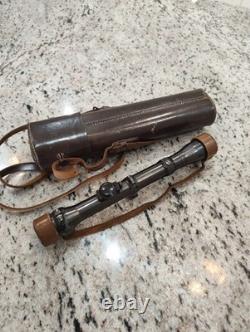
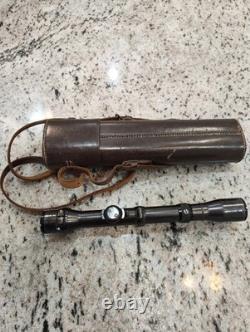
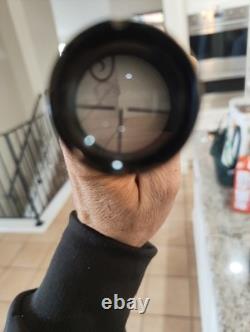
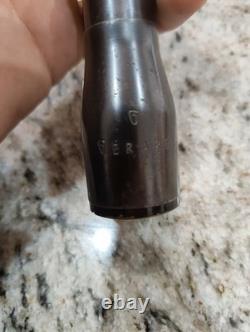
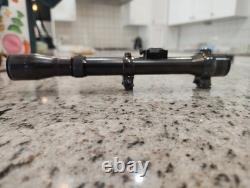
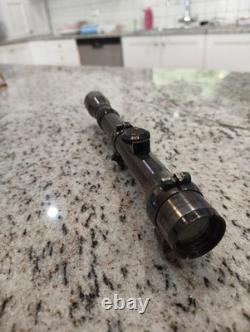
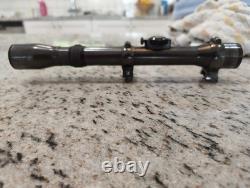
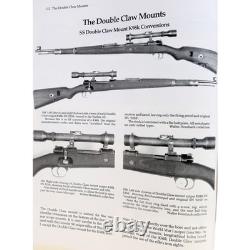

An unheard of complete kit that certainly saw combat from about 1939. The scope itself was manufactured by the famed Gerhard of Charlottenburg, the serial number placing the manufacture around 1938 as a commercial piece.
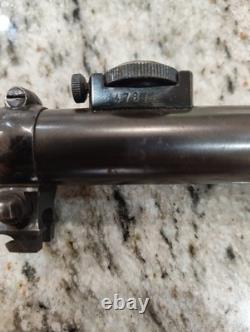
As the war started, the SS found themselves without critical equipment and requisitioned a great number of high-end civillian stock, including as many Gerhards as they could get. The suhler mounts are particularly important, they show the involvement of a master armourer and are typical of a scope requisitioned for use in the Waffen SS units. There is little doubt that this scope was used in combat and research strongly suggests it was carried by a sniper of the 1st SS Panzer Division (SS Liebstandarte Adolph Hitler).
The 1st SS Panzer traced it's history to the First World War Imperial German veteran shock troops who would form Hitler's personal bodyguard in 1933, bringing with them the Totenkopf (Deaths Head) emblem that had first seen action in Flanders. They would grow into arguably the most prominent unit of either side in the war. Shortly after the production of the scope, the 1st Panzer Division were equipping for the invasion of Poland.
Excluded from the Wehrmacht procurement and desperate for high quality materiel, the Waffen SS units seized every available scope, and Gerhard made some of the best. The master armourer equipped the prized bear claws, struck the piece with the deaths had and the initials LSAH and the leather case would have hung close at hand for the sniper equipped with it. The scope would have travelled, fought and killed with the SS Liebstandarte Adolph Hitler across the most famous of battlefields, in Poland, against British Tanks at Arras in the invasion of France, taking the surrender of Rotterdam in the Netherlands and used with devastating effect on the British massing on the beach at Dunkirk. The SS 1st Panzers would, now under the command of the ruthless Sepp Dietrich, meet the British again in bloody campaigns across Greece and Yugoslavia, in the process gaining a mythical air of invincibility.The cross-hairs which still perform their cold and deadly function today next sought victims as the storm of Barbossa descended on the Soviet Union, fighting endless engagements and being redeployed numerous times under the command of Erich Von Manstein, the 1st Panzer divisions battle honours would only continue to grow. Kharkov and Kursk in particular ravaged the division as the tide turned inexorably against the Nazis, but the remarkable division still had high morale and deadly efficiency, Unterscharführer Franz Staudegger for example, destroyed 22 of the prized T34 Stalin tanks, while in retreat. The Swiss army knife of the high command then fought in Italy before D-Day's success meant the division was required in France. As they had been prominent in the rise of the Nazi's, the 1st Panzer Division fought just as remarkably in the hopeless dying throes of Hitler's regime. Forming the nucleus of Kampfgruppe Peiper, elements of the 1st Panzers struggled through the snow of the Ardenne to shock and temporarily stun the Allied advance.
It was here the scope, with its German alpine hunting pedigree, would have probed the snowy mists for the shadows of their equally famous opponents, the 81st Airborne. According the Heinz Guiderian, the SS Liebstandarte Adolph Hitler were under orders to remove all divisional insignia. This is sometimes confused with the later order of Adolph Hitler to remove cuff-titles from all SS divisions.
The 1st Panzers had special motivation to do so because of their massacre of American Soldiers during the Battle of the Bulge. The survivors of the unit fought ferociously in the battle of Berlin, remaining at their posts until Hitlers suicide. The surviving 1600 men of the once-proud division made the decision to attempt to break through the Russian lines and surrender to the Americans.
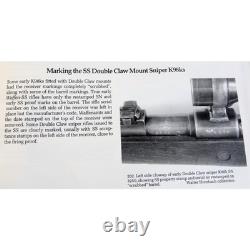
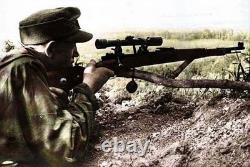
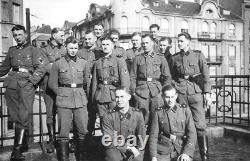
It was probably around this time that the Scope was altered to remove the totenkopf and LSAH markings leaving only the ghost marks visible today. It was well known that surrendering without equipment immediately raised suspicions so the LSAH men who survived to surrender to the Yankees near Steyr all carried de-identified kit. It is likely that the scope was taken by an American soldier on 8 May 1945. Provenance is, as the soldier had intended, impossible to confirm but one can say decidedly that every inference supports the scopes use by 1st Panzer Division. Additional photos include literature around the armoury, photograph of 1st panzer sniper using a Gerard scope, photographs of the diviison.